Explore Shun Education
Product Insights
Dual Core: Sharpness Redefined
Knife Knowledge
Damascus, Tsuchime & San Mai Edge
Use & Maintenance
Recipes
Blog
Why Shun Knives Feel So Different
Knife Anatomy and the Perfect Chef’s Grip
Essential Knife Cuts Every Home Chef Should Master
Knife Techniques for Everyday Ingredients
A Culinary Conversation with Chef Vitor Mendes
Damascus, Tsuchime, and San Mai Edge
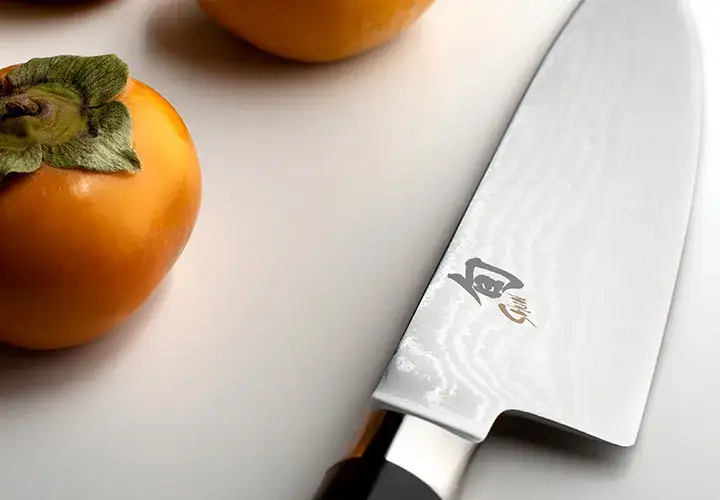
Shun’s Damascus is formed by layering different types of metal alloys together, then forging them into a single piece. The process and the different characteristics of the layered metals create the rippling patterns you see on the blade. The number of layers can vary; many Shun knives, for example, have 34 layers of metal on each side of a high-performance VG-MAX cutting core.
As Shun artisans grind each Damascus-clad blade from its thickest point at the spine to its razor-sharp cutting edge, they reveal the patterns. To bring them out even more, they bead blast or acid etch each blade. Bead blasting also provides surface textures to help food release from the blade and reduce cutting drag. During acid etching, the layered metals react to the solution in different ways. For example, carbon steel darkens, while nickel silver remains bright. The alternating layers of darker and brighter metal help reveal the flowing, rippled pattern.
Damascus looks beautiful, supports and protects the hard, dense cutting core, and adds stain resistance. In Japan, this style of blademaking is known as kasumi. Kasumi means “mist” and is so called because the exterior Damascus can have a lovely misty appearance when compared to the harder cutting core. Kasumi construction provides the ultimate mix of properties: an extremely sharp edge and ease of sharpening.
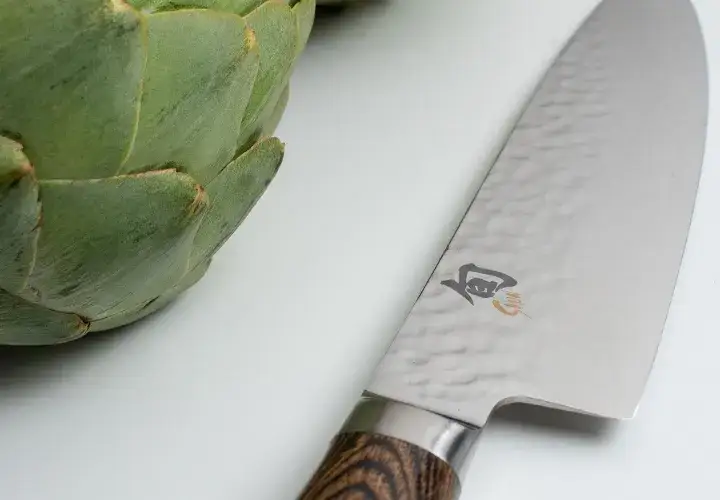
In Japanese, tsuchime (Tsoo-CHEE-may) simply means “hammered” and you will see actual hammer marks on a tsuchime-finished blade. This finish does two things: gives the knife a look that is reminiscent of the handcrafting techniques of ancient Japan; and it creates tiny pockets of air that act as hollow-ground cavities to reduce drag and quickly release food from the blade.
Shun’s gorgeous Premier series features a hammered tsuchime blade finish as do some of our exclusive lines.