Explore Shun Education
Product Insights
Dual Core: Sharpness Redefined
Knife Knowledge
Damascus, Tsuchime & San Mai Edge
Use & Maintenance
Recipes
Blog
Why Shun Knives Feel So Different
Knife Anatomy and the Perfect Chef’s Grip
Essential Knife Cuts Every Home Chef Should Master
Knife Techniques for Everyday Ingredients
A Culinary Conversation with Chef Vitor Mendes
Sharpening Vs. Honing
Sharpening and honing are not the same. Honing helps maintain your knife’s edge by realigning it when it begins to roll, while sharpening restores true sharpness by removing a small amount of metal. In general, hone regularly to help keep your knife performing well, and sharpen only when honing no longer brings the edge back.
Key Takeaways
- Honing helps maintain a knife’s edge by realigning it.
- Sharpening restores a worn edge by removing a small amount of metal.
- Hone regularly as part of routine knife care.
- Sharpen when honing no longer improves performance.
- Using both correctly helps maintain your knife edge over time.
What Is Knife Honing?
Honing helps maintain a knife’s edge between sharpenings. With regular use, the very fine edge of a knife can begin to roll slightly out of alignment. When that happens, the knife may feel less precise, even though the edge itself is still there.
A honing steel helps straighten that rolled edge so the knife can cut more cleanly again. Honing does not create a new edge, and it does not remove metal. It is a maintenance step that helps keep your knife performing the way it should between sharpenings.
How to Hone a Knife
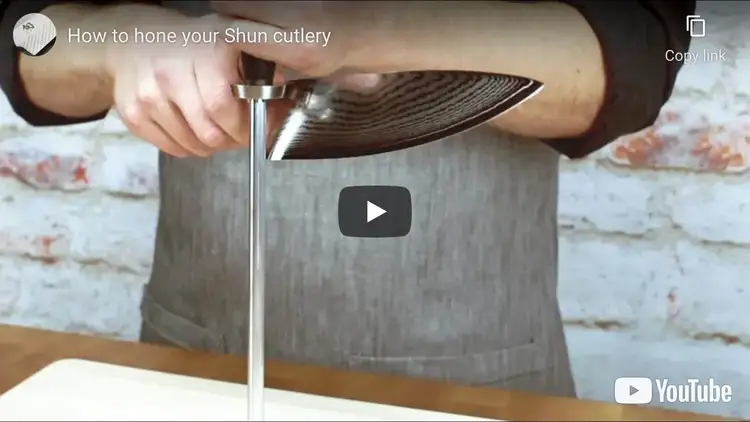
To hone your knife, align the flat side of the blade with the 16° angle guide on the hand guard of your Shun honing steel. Maintaining that angle, gently pull the blade down the steel from heel to tip.
Use light pressure and keep the motion smooth and controlled. The goal is not to grind the edge, but to help realign it. Some cooks hone once a week, while others hone every day. It depends on how often the knife is used. Regular honing can make a noticeable difference in how cleanly the knife moves through food.
What Is Knife Sharpening?
Sharpening restores a knife’s edge by removing a small amount of metal to create a fresh edge. Over time, regular use wears the edge down enough that honing alone is no longer enough to restore performance.
When that happens, sharpening is what brings the knife back. It is a normal part of knife care and an important reason a quality knife can deliver long-term performance with proper maintenance.
How to Sharpen a Knife
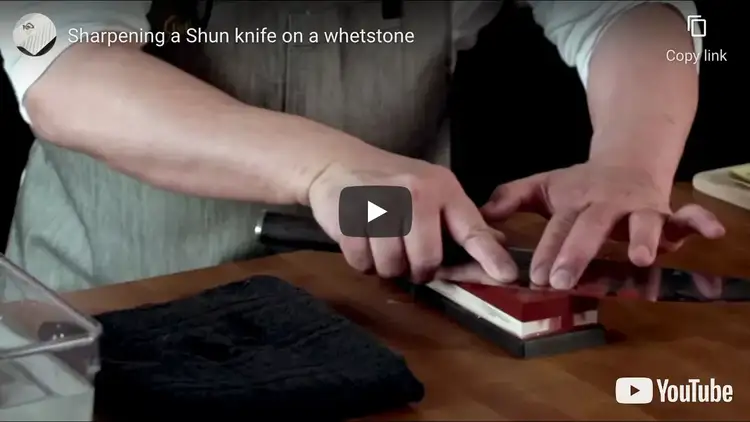
When sharpening, it is important to maintain the correct 16° angle. Because sharpening removes metal from the blade, it should be done only when the knife truly needs it.
For many home cooks, sharpening about once a year is often enough. Professional cooks or anyone using their knives heavily will likely need to sharpen more often. The easiest way to ensure your knives are sharpened correctly is to send them to Shun for free sharpening. For those who prefer a hands-on approach, a whetstone is the recommended method. The Shun 3-Piece Sharpening Set includes a base that helps make the correct angle easier to maintain.
Honing vs. Sharpening: Key Differences
Honing helps maintain the edge you already have. Sharpening creates a new one when the old edge has worn down. Both matter, but they serve different purposes.
Comparison Table
| Comparison Point | Honing | Sharpening |
| What it does | Realigns a rolled edge | Restores the edge by removing metal |
| Removes metal? | No | Yes |
| When to use it | Regularly, as part of routine maintenance | When honing no longer restores performance |
| Primary goal | Maintain cutting performance | Restore true sharpness |
When Should You Hone vs. Sharpen?
For most cooks, the simplest rule is to hone regularly and sharpen only when honing is no longer enough.
- Daily or very frequent use: hone as needed to help maintain the edge
- Weekly home cooking: hone regularly, often about once a week
- If the knife still feels dull after honing: it is time to sharpen
- Most home cooks: sharpening about once a year is often enough
- Professional or heavy use: sharpening may be needed more often
The exact timing depends on how often you cook and how heavily you use your knives, but the pattern is consistent: hone for maintenance, sharpen for restoration.
How to Maintain Your Knife Edge
A well-maintained edge depends on both habits and timing. Hone your knife regularly to help keep the edge aligned, and sharpen when the knife no longer responds to honing. Used together, these two steps help support better cutting performance and longer-term care.
Proper technique matters, too. Use your knife on appropriate cutting surfaces, avoid twisting through hard materials, and keep up with regular maintenance rather than waiting until the knife feels completely dull. A little attention over time helps preserve both performance and the overall cutting experience.
Frequently Asked Questions
What is the difference between honing and sharpening a knife?
Honing helps maintain a knife’s edge by realigning it when it begins to roll. Sharpening restores the edge by removing a small amount of metal to create a fresh cutting edge.
How often should you hone a kitchen knife?
That depends on how often you use it. Some cooks hone every day, while others hone about once a week. In general, regular honing helps maintain the edge between sharpenings.
How often should you hone a kitchen knife?
You should sharpen when honing no longer restores the knife’s performance. If the knife still feels dull after honing, it is time for sharpening.