Explore Shun Education
Product Insights
Dual Core: Sharpness Redefined
Knife Knowledge
Damascus, Tsuchime & San Mai Edge
Use & Maintenance
Recipes
Blog
Why Shun Knives Feel So Different
Knife Anatomy and the Perfect Chef’s Grip
Essential Knife Cuts Every Home Chef Should Master
Knife Techniques for Everyday Ingredients
A Culinary Conversation with Chef Vitor Mendes
SHUN CUTLERY BLOG: KNIFE EDUCATION
Essential Knife Cuts Every Home Chef Should Master
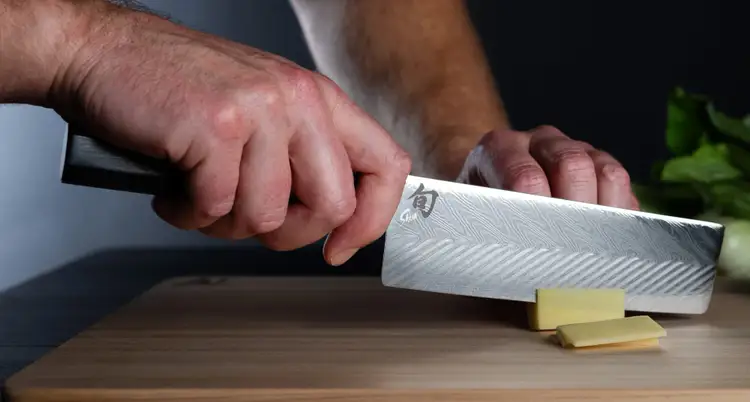
Mastering a few core knife cuts can transform your time in the kitchen. Whether you're prepping for a quick weeknight stir-fry or plating a dish with precision, the right cut enhances both flavor and presentation. With a Shun knife in hand, you’ll find each movement smoother, sharper, and more satisfying.
Key Takeaways
- Mastering foundational knife cuts improves cooking consistency, texture control, and visual presentation.
- Uniform cuts ensure even cooking times and balanced flavor distribution.
- Developing precision and repitition builds speed, confidence, and overall kitchen safety.
Why Knife Skills Matter
Uniform cuts aren’t just for looks; they help your food cook evenly and taste better. When your vegetables are the same size, they caramelize more consistently. When your herbs are finely and cleanly chopped, their oils stay intact.
Shun knives are crafted with thin, hard Japanese steel, designed to glide effortlessly through ingredients. This means less pressure, cleaner cuts, and more control.
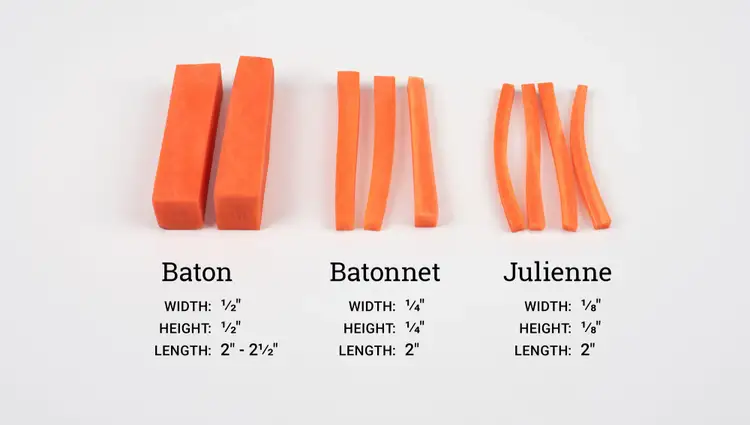
Baton, Batonnet, and Julienne
These foundational cuts are all about precision and consistency.
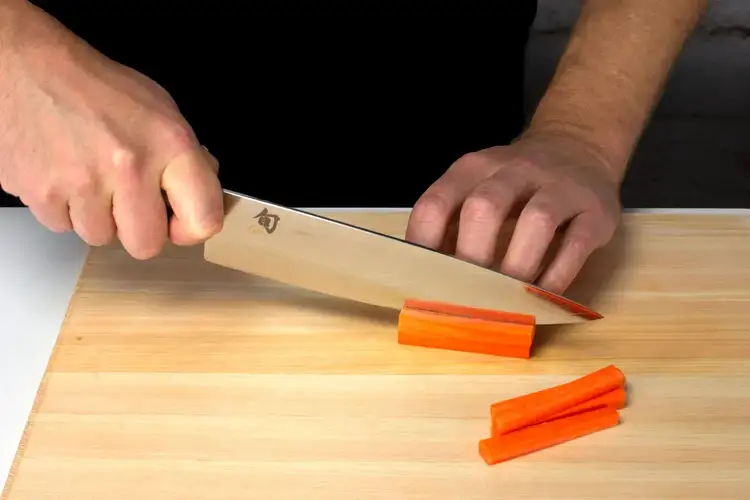
- Square off the sides of your ingredient.
- Cut into even planks.
- Stack the planks and slice lengthwise into sticks.
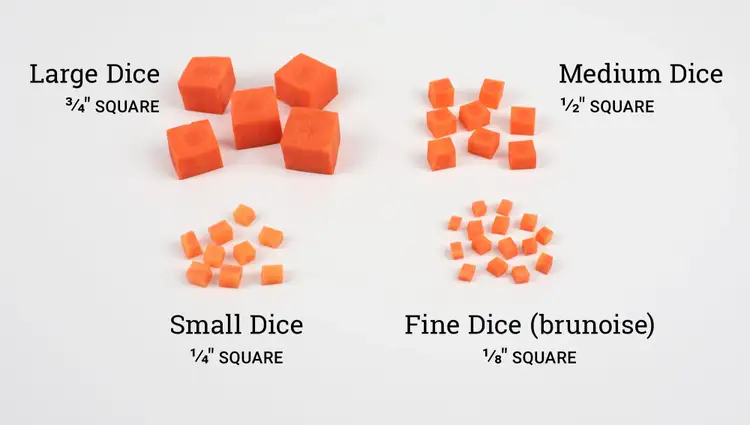
Dice
A dice is simply a baton, batonnet, or julienne stick cut crosswise into cubes. Once the sticks are cut, square them up, then cut into cubes.
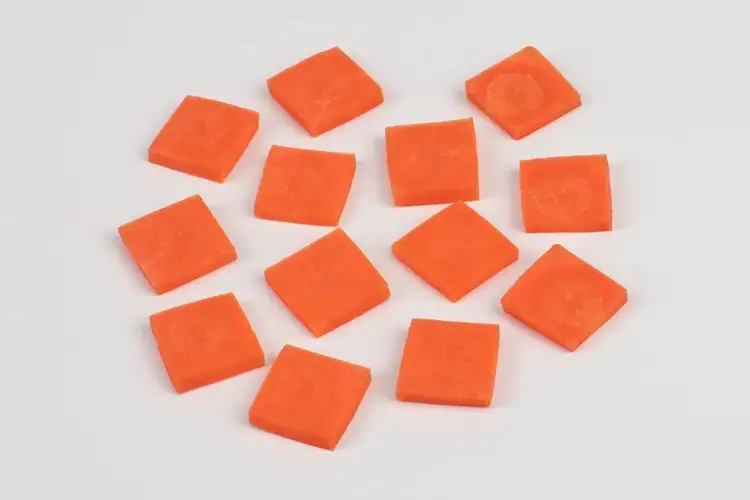
Paysanne
A thinner version of a small or medium dice. Once you have your baton or batonnet, cut crosswise into 1/8 in. thick slices. This cut speeds cooking.
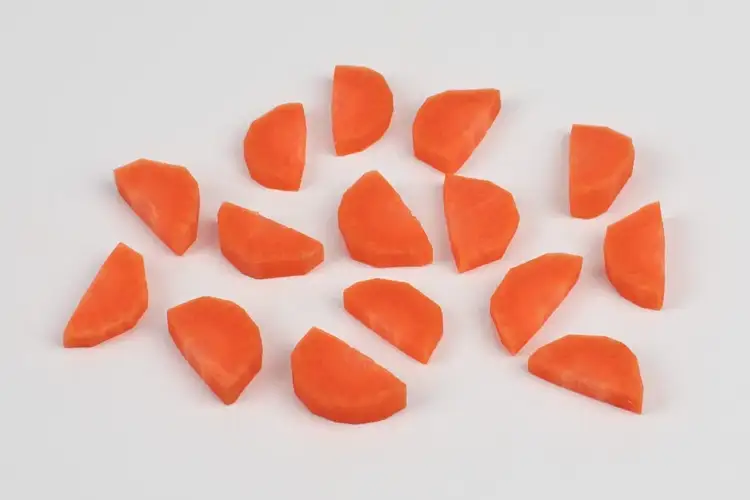
Fermière
The finished shape of the slice can vary, depending on the shape of the food you’re slicing, but all pieces should be uniform in size. For example, you could cut a carrot in half lengthwise, then slice into half-moons.
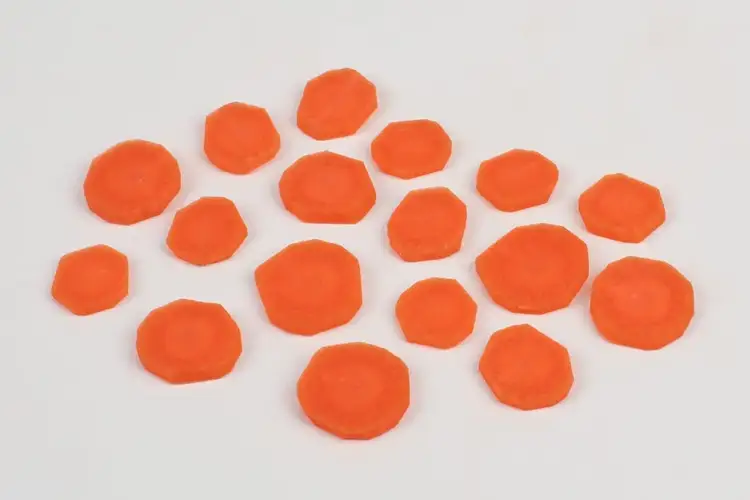
Rondelles
Take advantage of the shapes of cylindrical foods, like carrots or cucumber. Simply cut them crosswise into even slices.
Mince
Mincing is chopping smaller foods, such as fresh herbs or garlic, into very fine pieces—smaller than a fine dice.
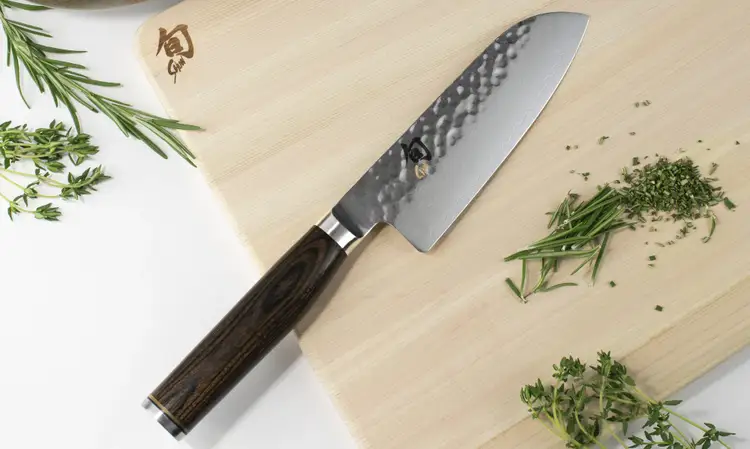
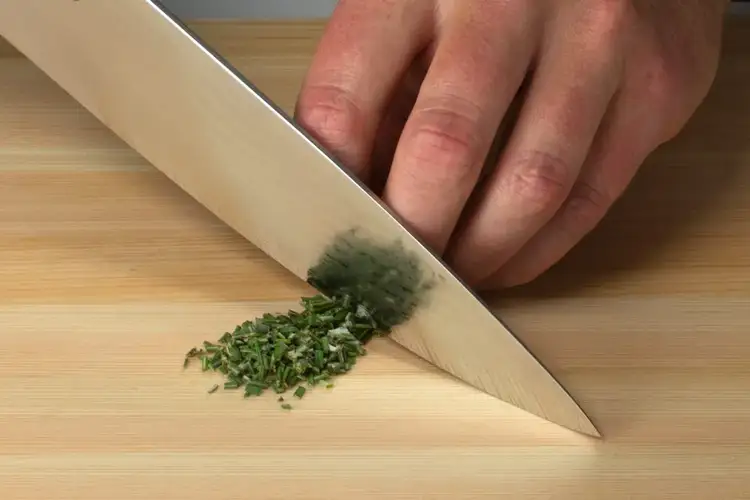
Gather washed and dried herbs or peeled, trimmed garlic cloves tightly together. Rock your knife through the pile, creating slices.
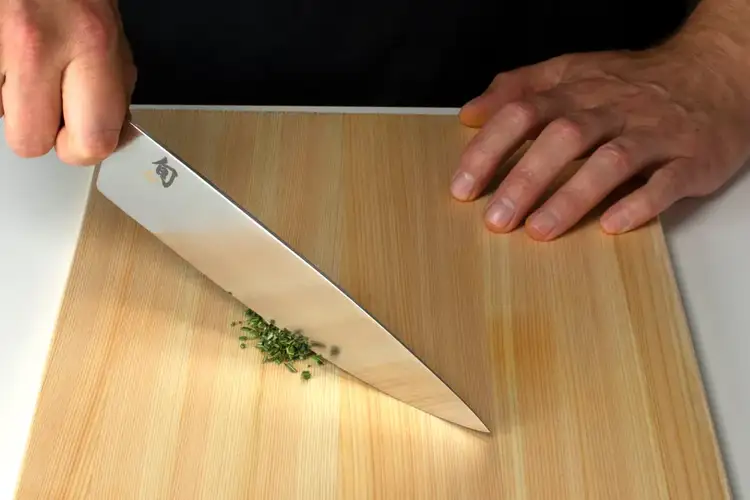
Turn the food 90° and continue cutting.
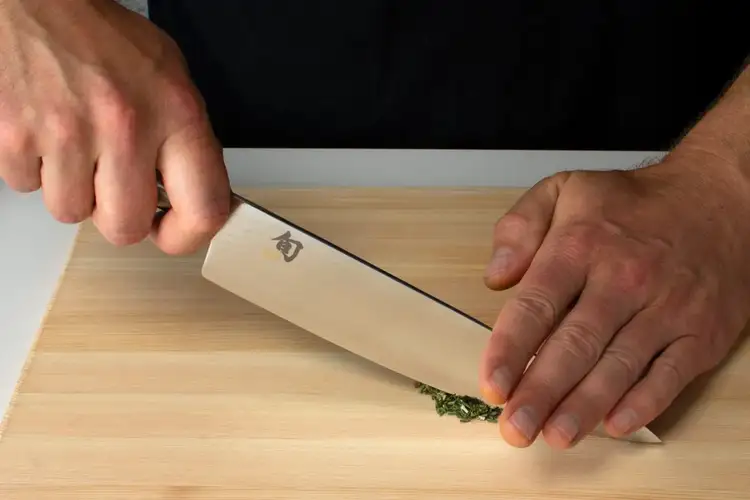
Place the palm or fingertips of your non-knife hand on the spine near the tip of the knife. Using the tip as a pivot point, rock the blade through the food until the mince is as fine
as you want.
Chiffonade
Chiffonade is a method of cutting leafy herbs, such as basil, or leafy greens, such as kale, into ribbons. It makes cooking and eating leafy greens faster and easier or makes a beautiful herbal garnish.
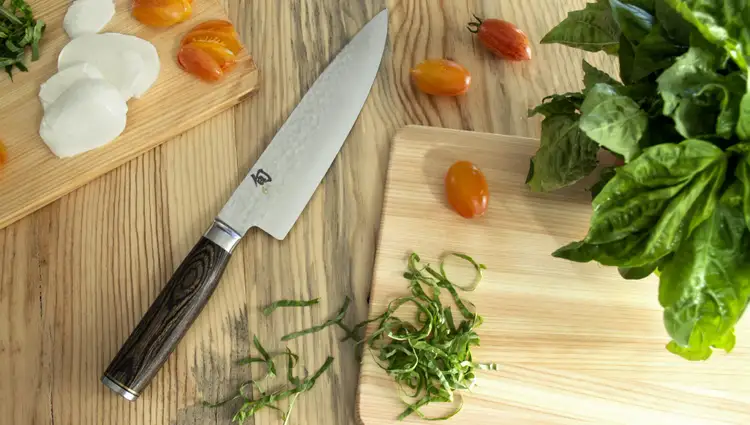
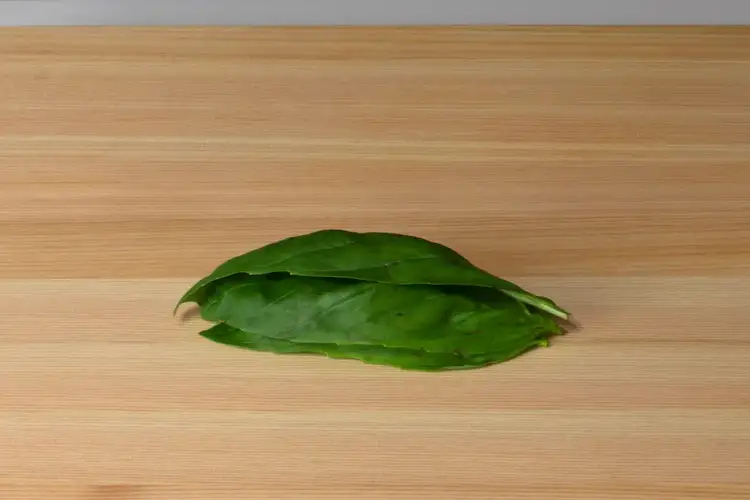
Stack several leaves on top of each other so that the stem ends are lined up.
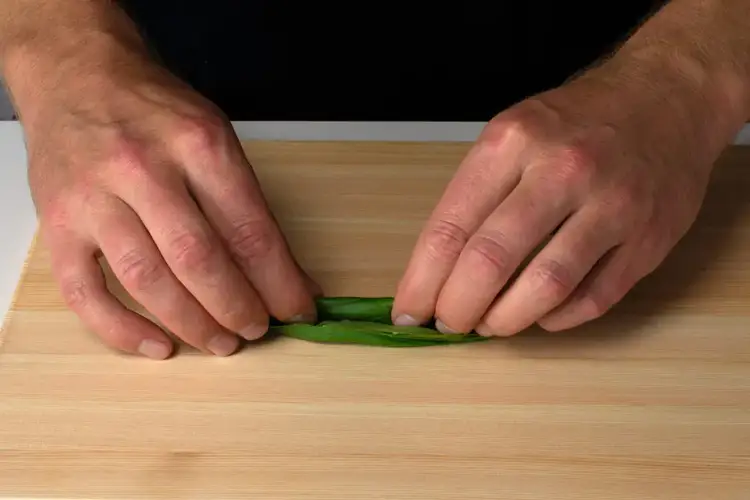
Starting from the sideof the stack, roll leaves into a bundle.
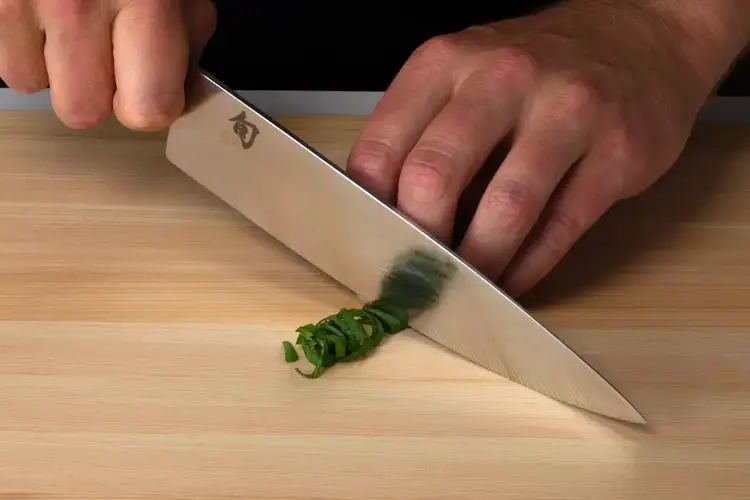
Cut the bundle crosswise into thin strips.
Build a Strong Foundation with Every Slice
Mastering these foundational cuts equips you with the essential techniques every home chef should know. These skills not only improve the look of your dishes but enhance texture, cook time, and flavor.
Now that you know the cuts, let’s put them into practice. In the next article, we’ll walk you through step-by-step techniques for prepping onions, peppers, and vegetable florets—the building blocks of countless recipes. Read now: Knife Techniques for Everyday Ingredients.
Frequently Asked Questions
Why are uniform cuts important in cooking?
Evenly sized ingredients cook at the same rate, preventing undercooked or overcooked portions. Consistency also improves texture and ensures flavors develop evenly throughout a dish.
What are the most essential knife cuts for home cooks?
Foundational cuts include dice, mince, chiffonade, julienne, and slice. Mastering these techniques provides versatility for vegetables, herbs, and proteins.
How can practicing knife cuts improve kitchen efficiency?
Repetition builds muscle memory, allowing cooks to move faster while maintaining control. Improved efficiency reduces prep time and enhances safety.
Does better knife technique affect food presentation?
Yes. Clean, consistent cuts create professional-looking dishes and elevate the overall dining experience.
Recent Articles
NEWS AND ANNOUNCEMENTS | Shun Kagerou Honored with 2025 Red Dot Award for Product Design
The Shun Kagerou 8" Chef Knife has just received a 2025 Red Dot Award for Product Design. See what sets this exclusive, limited-edition knife apart from the rest.
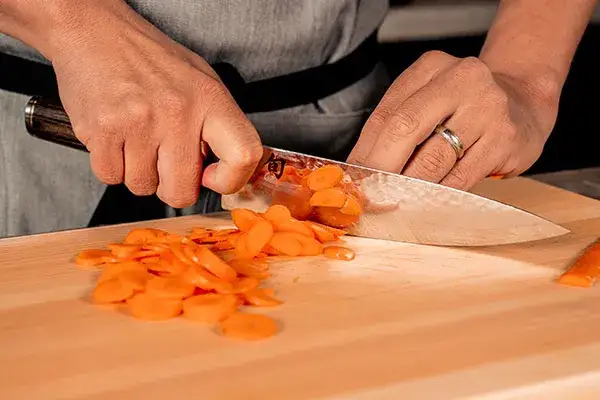
KNIFE KNOWLEDGE | Shun 101 Part 1: Why Shun Knives Feel So Different
Discover why Shun knives stand apart through centuries of Japanese craftsmanship, superior steel, and precision engineering. This article explores what makes Shun knives lighter, sharper, and more intuitive for effortless, elevated cooking every day.
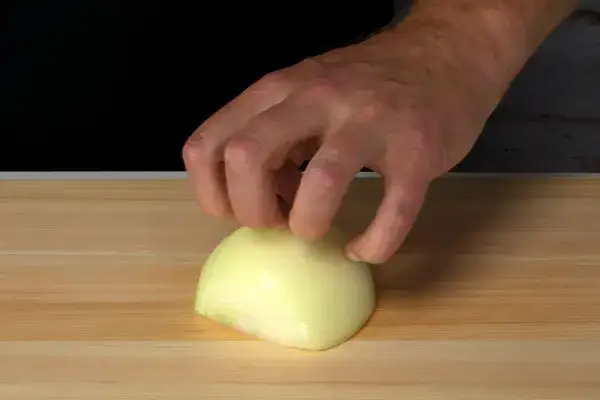
KNIFE KNOWLEDGE | Shun 101 Part 2: Knife Anatomy and the Perfect Chef’s Grip
Learn the anatomy of a Shun knife and how to hold it like a pro. This guide covers each part of the knife and demonstrates the chef’s grip, giving you better control, comfort, and cutting precision in the kitchen.
BEHIND THE BLADE | From Brazil to Brooklyn: A Culinary Conversation with Chef Vitor Mendes
Chef Vitor Mendes shares his journey from Brazil to Brooklyn, his love for culinary craftsmanship, and how meaningful tools—like a great knife—help him express creativity and honor the flavors of the Amazon.
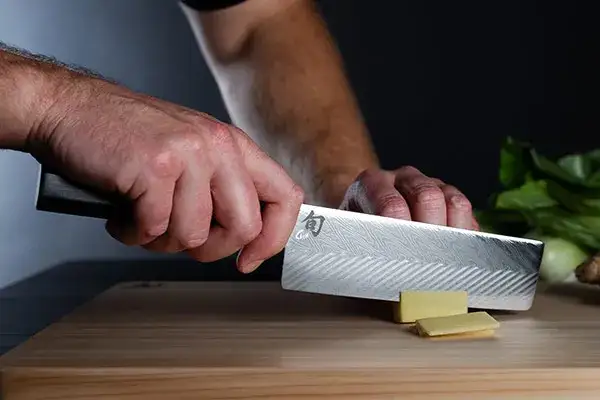
KNIFE KNOWLEDGE | Shun 101 Part 3: Essential Knife Cuts Every Home Chef Should Master
Mastering a few core knife cuts can transform your time in the kitchen. Whether you're prepping for a quick weeknight stir-fry or plating a dish with precision, the right cut enhances both flavor and presentation. With a Shun knife in hand, you’ll find each movement smoother, sharper, and more satisfying.
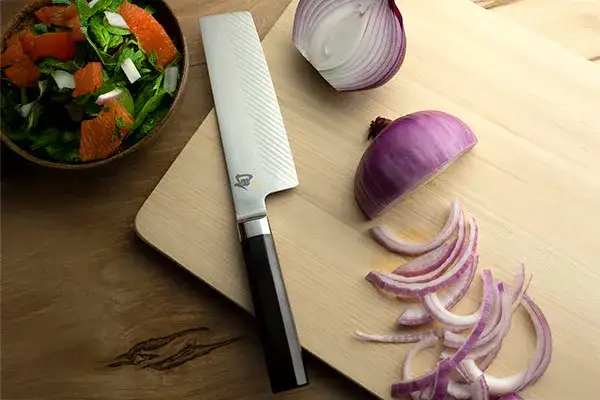
KNIFE KNOWLEDGE | Shun 101 Part 4: Knife Techniques for Everyday Ingredients
Learn essential cutting techniques for common kitchen staples like onions, bell peppers, and broccoli. This guide walks you through simple, effective steps to prep vegetables with confidence—using the right Shun knife for the job.
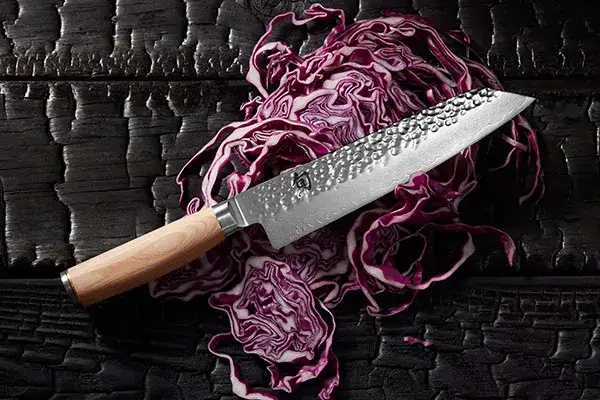
KNIFE KNOWLEDGE | Know Your Knife: Mastering the Kiritsuke Knife
Discover the story behind the kiritsuke—its heritage, purpose, and what sets each Shun version apart. Precision, tradition, and performance come together in this iconic blade.